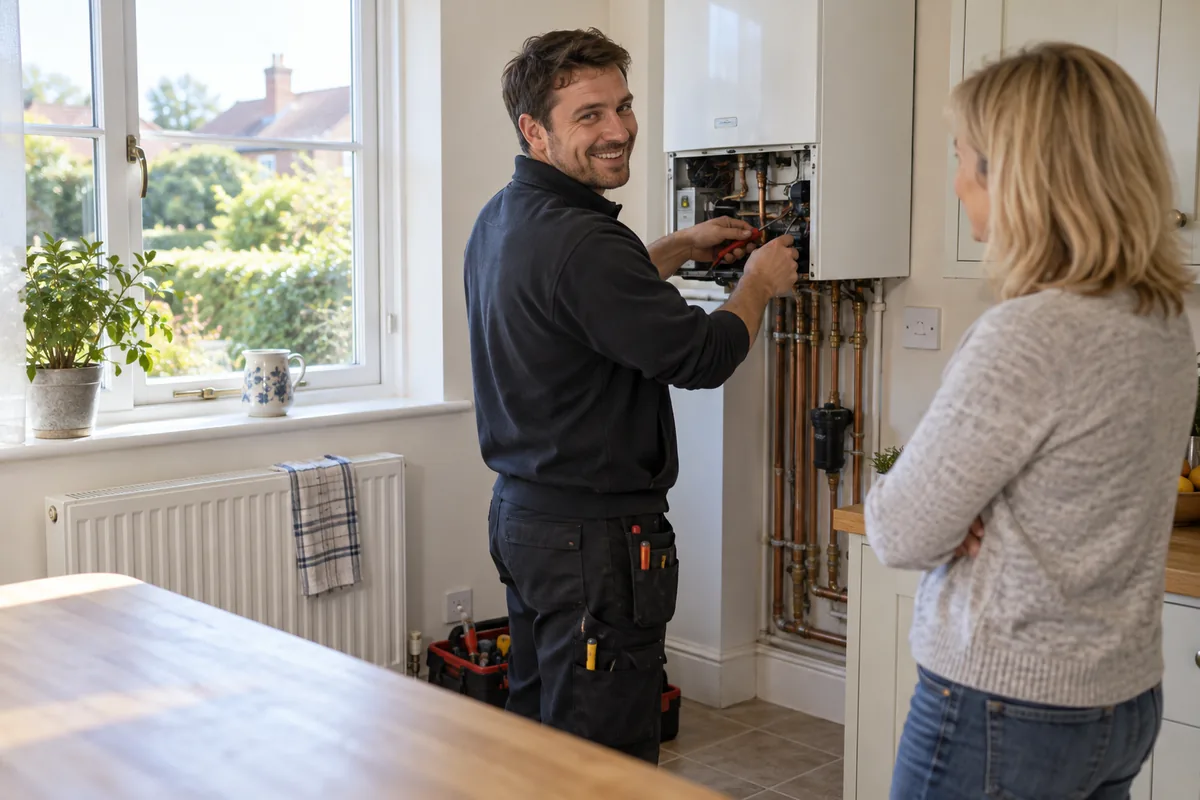
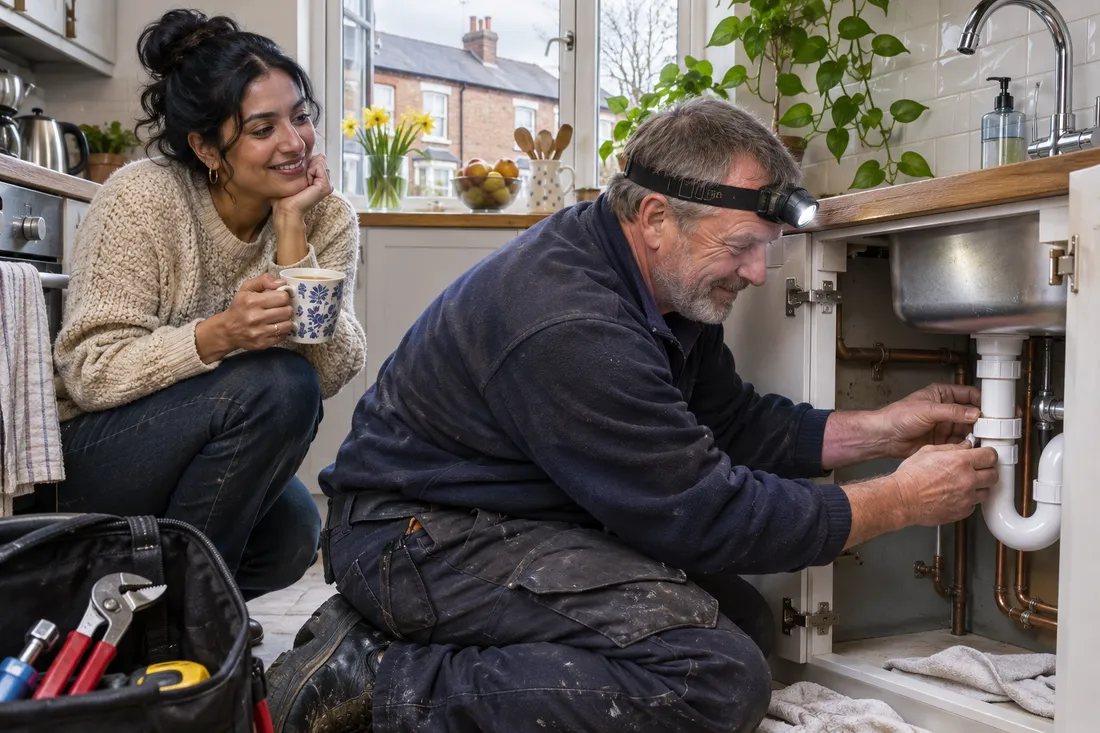
"The job's not right and I'm not happy." Every local business owner gets that call sooner or later. How you handle the next ten minutes often decides whether you end up with a fixed problem and a loyal customer, or a one-star review sitting on your Google listing for years.
This guide gives you a calm, simple process for when a job goes wrong, word-for-word scripts you can use on the phone, and the things you must not do under UK law.
In short
- Most bad reviews start as a complaint that wasn't handled well on the day. Handle the call well and most never get written.
- Use a simple five-step process. Listen, agree the facts in writing, fix it, follow up, then close it off.
- Never pressure, pay or threaten anyone to stop or remove a review. UK law and Google's own rules both ban it.
- If a bad review does go up, a short, calm public reply shows future customers how you treat people when things go wrong.
- A good complaint process saves you time, protects your star rating and wins repeat work and referrals.
What a badly handled complaint really costs you
It's easy to think of a complaint as one awkward phone call. In reality it can cost you far more than the job itself.
Think about a roofer in Guildford who replaces some tiles. Two weeks later the customer rings to say there's still a damp patch on the bedroom ceiling. The roofer is up a ladder on another job, feels he's being accused of bad work and says, a bit sharply, that it's probably condensation. The customer hangs up feeling fobbed off.
That evening they write a review. "Left us with a leak and didn't want to know." It's one star, it's the first thing people see when they check the listing, and it stays there.
Here's what that one call can cost.
- Lost enquiries. People choosing between three roofers on Google read the bad reviews first. One angry review with no reply can be enough to send them to the next name on the list.
- Lost referrals. An unhappy customer tells neighbours, family and the local Facebook group. A happy one recommends you for years.
- Lost time. A complaint that drags on means more calls, more texts and more stress than sorting it properly the first time.
- Lost repeat work. Most trades rely on the same customers coming back. Lose one and you lose every future job from that house.
The good news is that the same call, handled well, often does the opposite. A customer who sees a problem put right quickly has now seen how you behave under pressure, and that's often what turns them into someone who recommends you.
What you gain: fewer bad reviews, a stronger star rating and customers who stay with you.
Why complaints turn into bad reviews
Very few people go straight to Google to complain. Most bad reviews are written after the customer feels they weren't listened to. The usual triggers are simple.
- No one called back. They left a message, heard nothing for three days and gave up.
- They were argued with. The first thing they heard was why it wasn't your fault.
- Nothing was agreed. "We'll pop round at some point" turns into weeks of nothing.
- It was fixed but not followed up. The problem came back and they felt they'd have to chase you again.
- They felt pushed. Being asked to "keep it off Google" makes people more likely to post, not less.
All of these are about how the complaint is handled, not about the original mistake. That's why a clear process makes such a difference. You can't promise every job will go perfectly, but you can control what happens next.
The five-step process for putting it right
Write this down, stick it on the office wall and make sure anyone who answers your phone knows it. It works for a one-person business and for a team of twenty.
Step 1. Listen without arguing (5 to 10 minutes)
Let them say everything before you reply. Don't explain, don't defend and don't guess at the cause yet. Take notes. People calm down much faster when they feel heard.
Useful things to say:
- "I'm sorry this has happened. Tell me exactly what you're seeing."
- "When did you first notice it?"
- "Is it causing any damage or safety worries right now?"
That last question matters. A gas smell, water coming through a ceiling or a broken lock needs action today, so deal with safety first and the rest later.
Step 2. Agree the facts and next step in writing (5 minutes)
Before you end the call, agree one clear next step and a time. Then send a short text or email the same day so there's no confusion later.
Here's an example a heating engineer in Crawley might send after a call about a boiler that keeps losing pressure.
"Hi Mrs Patel, thanks for letting me know about the boiler pressure dropping again. I'm sorry it's not sorted. I'll come back on Thursday between 8 and 10am to check it at no charge. If anything gets worse before then, call me on this number. Dan"
This does three things. It shows you're taking it seriously, it gives the customer something definite to wait for, and it gives you a record if there's ever a dispute.
Step 3. Fix it properly (time depends on the job)
If the work wasn't up to standard, the law is on the customer's side anyway. Under the Consumer Rights Act 2015, services you provide to consumers must be carried out with reasonable care and skill. If they aren't, the customer can ask you to put it right at no extra cost, within a reasonable time and without causing them significant hassle. If that isn't possible, they can ask for money off, up to a full refund. Business Companion, the Trading Standards guidance site, explains this clearly in its guide to supplying services.
Knowing this helps. Instead of debating whether you "have to" go back, you can simply say yes and get on with it. It's quicker, it's cheaper than a long argument and it's what the customer will expect.
If you look and it genuinely isn't your work at fault, explain what you found in plain words, show them photos and offer a sensible option. Stay polite even if you're right.
Step 4. Follow up a few days later (2 minutes)
This is the step almost everyone skips, and it's the one customers remember. A few days after the fix, send a quick message.
"Hi Mrs Patel, just checking the boiler pressure has stayed steady since Thursday. If anything's not right, let me know and I'll come straight back."
That one text tells the customer you care about the result, not just closing the job.
Step 5. Close it off and learn from it (10 minutes)
Once they're happy, make a note of what went wrong and why. Was it a rushed job, a supplier fault, a misunderstanding about what was included? If the same thing keeps coming up, change how you quote or what you explain at the start. Fewer repeat problems means fewer complaints and more time on paying work.
What you gain: complaints sorted in days rather than weeks, a written record if there's ever a dispute and customers who feel looked after.
Word-for-word scripts for the hardest moments
The first thirty seconds of a complaint call are the hardest. Having the words ready stops you saying something you regret.
When the customer is angry
"I can hear how frustrating this is, and I want to get it sorted for you. Let me take down exactly what's happening so I can work out the fastest way to fix it."
When you can't come out straight away
"I'm booked solid today, but I don't want to leave you waiting. I can be with you first thing tomorrow at 8. Does that work? If it gets worse tonight, ring me on this number."
When you think it isn't your fault
"I'd like to come and have a proper look so we both know what's causing it. If it's something I did, I'll put it right at no cost. If it's something else, I'll show you what I find and talk you through the options."
When the complaint comes from a commercial client
A commercial cleaner in Horsham might get an email from an office manager saying the kitchen was missed two nights running. Business clients want to know it won't happen again.
"Thanks for flagging this, and I'm sorry. I've spoken to the team and we'll do a full kitchen clean tonight at no charge. I've also added the kitchen to the nightly sign-off sheet so it's checked every visit. I'll call you on Friday to make sure you're happy."
What you gain: calmer calls, less stress for you and your team, and customers who feel you're on their side.
What you must not do under UK law
When a review threatens your rating, it's tempting to try to make it go away. Some of the most common tactics are now illegal.
Since April 2025, the Digital Markets, Competition and Consumers Act 2024 has banned fake reviews and a range of related practices. The Competition and Markets Authority (CMA), the UK's consumer watchdog, has published guidance on fake reviews that spells out what businesses should not do. In its words, a business may break the law if it tries to "suppress genuine negative or positive reviews".
In practice, that means you should never:
- Offer a refund, discount or gift to a customer if they change or remove a negative review. The CMA guidance gives this as an example of a banned practice.
- Make putting the job right depend on the customer not leaving a bad review.
- Threaten legal action or anything else to stop someone posting an honest review.
- Only ask happy customers for reviews while quietly leaving out the ones who had a problem.
Google's own rules say the same. Its Maps content policy says businesses must not "discourage or prohibit negative reviews, or selectively solicit positive reviews". Break those rules and you risk reviews being removed or restrictions on your listing.
What you can do is fix the problem properly and then, once the customer is genuinely happy, let them decide for themselves whether to update what they wrote. Many will. Just don't ask for it in exchange for anything.
What you gain: peace of mind that your reviews are clean, honest and won't come back to bite you.
If a bad review goes up anyway
Even with the best process, some reviews will still get written. Sometimes it's someone who never called you at all. How you respond is now your shop window, because everyone who reads that review will also read your reply.
Reply calmly and briefly
Google's help page on managing reviews says helpful replies show you're responsive to customers, and the reviewer is told when you reply. Keep it short, polite and focused on putting things right. For example.
"Thank you for your feedback, and I'm sorry the repair didn't go as it should. I'd like to come back and put it right. Please call me on [your number] and I'll arrange a visit at no charge. James"
Don't argue the details in public, don't share the customer's personal information and don't reply when you're still annoyed. Write it, leave it an hour, then post it. Our guide on how to reply to Google reviews, even the bad ones, has more examples.
Only report reviews that break Google's rules
Google will only remove reviews that break its policies, such as fake reviews, offensive language or reviews from someone who was never a customer. It won't remove a review just because it's negative. Its help page on reporting reviews explains the process. If you think a review is fake, read our guide on what to do about a fake or unfair Google review.
Drown it out with honest good reviews
One bad review among five looks serious. One bad review among sixty looks like an off day. The best protection is a steady stream of genuine reviews from all your customers. Make asking part of every finished job, as we explain in how to ask for a Google review when customers are most grateful.
What you gain: a listing where one bad day doesn't define your business, and replies that win the trust of people still deciding who to call.
A simple complaints checklist for your business
Run through this list once and you'll be ready for the next difficult call. Most owners can set it up in an afternoon.
- Decide who answers complaint calls and how fast. Same day is the goal.
- Make sure missed calls go to a voicemail that says when you'll call back.
- Save the three or four scripts above in your phone notes.
- Create a short text or email template to confirm the next step in writing.
- Keep before and after photos of every job. They settle most disputes quickly.
- Set a reminder to follow up a few days after every fix.
- Check your Google reviews at least weekly so nothing sits unanswered.
- Write down the cause of every complaint and look for patterns every few months.
Common mistakes
- Waiting to call back. A complaint left overnight feels twice as big by morning.
- Defending before listening. Even if you're right, starting with an excuse makes people dig in.
- Vague promises. "We'll sort it" isn't a plan. Give a day and a time.
- Asking them to keep it off Google. It often backfires, and offering something in return can break the law.
- Replying to a review in anger. Future customers judge your reply more than the review.
- Ignoring old reviews. An unanswered one-star review from two years ago still puts people off today.
Want help protecting your reviews and winning more work?
Handling complaints well is one part of a strong online reputation. The other part is making sure your Google listing, reviews and website work together to bring in calls. That's what we do for trades and local businesses across Surrey, Sussex and Hampshire through our review management, Google Business Profile and trades marketing services. You can read our success stories, including Mainstream Cleaning, who saw 55% more enquiries.
Book a free, no-obligation 30-minute call and we'll look at your reviews and listing together.
Show me where I'm losing enquiries
Prefer to learn first? Join our free Thursday Lunch 'N' Learn session, or call Philip on 01306 480440.